What is Laser Hair Removal and How Does It Work?

Unwanted hair can be frustrating to manage, especially when shaving, waxing or using hair removal creams becomes part of your regular routine. These methods can remove hair temporarily, but the results usually do not last long.
Laser hair removal offers a longer-lasting alternative. It uses concentrated light energy to target hair follicles and reduce their ability to produce hair over time.
The treatment is popular among people who want smoother skin, fewer ingrown hairs and less frequent maintenance. But how does laser hair removal actually work? Is it safe, and how many sessions do you need to see results?
Understanding the process can help you decide whether it is the right option for your skin and hair type.
What Is Laser Hair Removal?
Laser hair removal is a non-invasive cosmetic treatment that uses concentrated light energy to reduce unwanted hair growth.
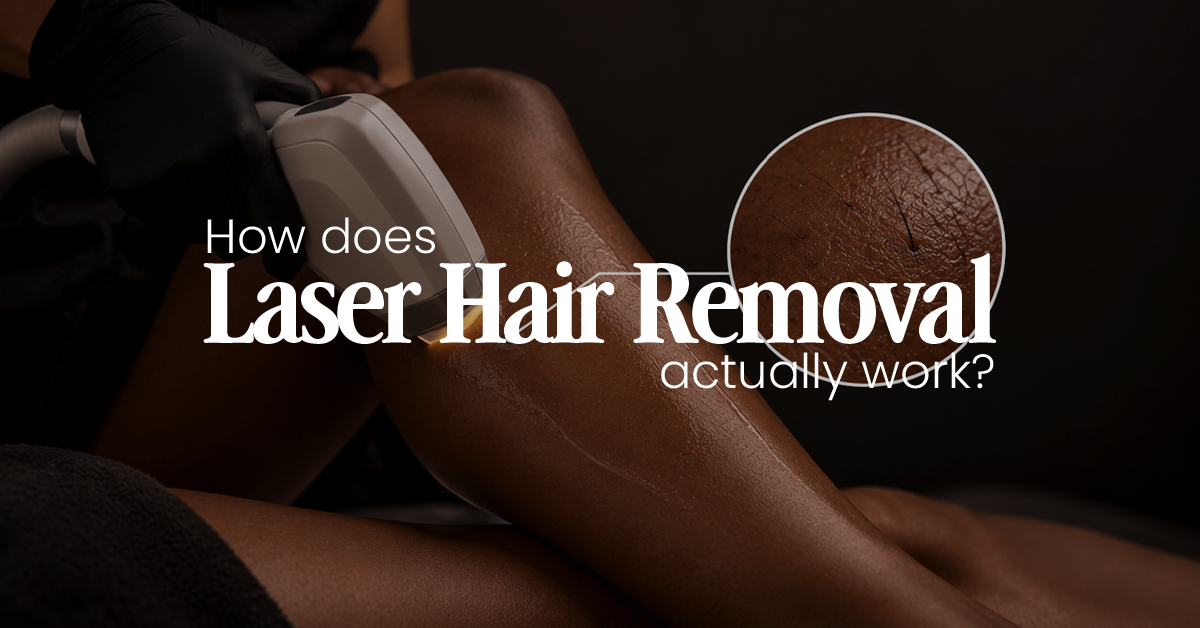
The laser targets melanin, the pigment responsible for the colour of your hair. When the pigment absorbs the light energy, it converts it into heat. This heat damages structures within the hair follicle responsible for hair growth.
As a result, the treated follicles become less effective at producing hair. Unlike shaving, which cuts hair at the skin’s surface, or waxing, which pulls hair out from the root, laser hair removal works by targeting the follicle itself.
The goal is long-term hair reduction rather than guaranteed permanent removal of every hair. Hair may become finer, lighter and less noticeable after a series of treatments. Some regrowth can occur, and maintenance sessions may be needed.
How Does Laser Hair Removal Work?
Laser hair removal works through a process called selective photothermolysis. In simple terms, this means using light energy to heat a specific target while limiting damage to the surrounding skin. Here is how the process works.
1. The Laser Targets Hair Pigment
The laser emits light at a specific wavelength that can be absorbed by melanin in the hair shaft and follicle. Because darker hair generally contains more melanin than lighter hair, it often responds more effectively to laser treatment.
2. Light Energy Converts Into Heat
Once the hair pigment absorbs the laser energy, it generates heat within the follicle. The treatment parameters are selected according to factors such as skin tone, hair colour, hair thickness and the area being treated.
3. The Hair Follicle Is Disrupted
The heat damages the follicular structures involved in hair growth. This reduces the follicle’s ability to produce hair effectively. The surrounding skin must be protected by using appropriate settings and cooling methods.
4. Hair Growth Gradually Decreases
Treated hairs may shed over the following days or weeks. With repeated sessions, hair growth generally becomes less dense and the remaining hair may become finer. Because hair follicles respond differently depending on their growth stage, several sessions are necessary to achieve meaningful results.
Why Do You Need Multiple Laser Hair Removal Sessions?
One of the most important things to understand about laser hair removal is that hair does not grow all at once.
Hair follicles cycle through different stages:
(i) Anagen: The active growth phase, when the hair is growing and is generally most responsive to laser treatment.
(ii) Catagen: A transitional phase when growth slows and the follicle begins to change.
(iii) Telogen: The resting phase, when the hair is no longer actively growing.
Laser hair removal is generally most effective when the hair is in the active growth phase. However, not all follicles are in that phase at the same time.
This is why a single session cannot effectively treat every hair follicle.
Most people need a series of sessions spaced several weeks apart. The exact number depends on the treatment area, hair characteristics, hormonal factors and individual response.
Which Areas Can Be Treated With Laser Hair Removal?
Laser hair removal can be used on many areas of the body, depending on the individual’s suitability and the device being used.
Common treatment areas include:
(i) Face: Areas such as the upper lip, chin and sideburns may be treated to reduce unwanted facial hair.
(ii) Underarms: Underarm laser hair removal is popular among people who want to reduce frequent shaving and associated irritation.
(iii) Arms and Legs: Laser treatment can help reduce unwanted hair on the arms, forearms, lower legs and thighs.
(iv) Bikini Area: Laser hair removal can reduce hair growth around the bikini line and other appropriate intimate areas.
(v) Back and Chest: People with unwanted hair on the back, shoulders or chest may also benefit from treatment.
The appropriate settings and expected results vary depending on the area, skin tone and hair characteristics.
What Is Alma Soprano Titanium Laser Hair Removal?
The technology used for laser hair removal can influence the treatment experience and the range of skin and hair types that can be treated.
At LYEV Beverly Hills Bangladesh, laser hair removal is performed using the Alma Soprano Titanium, a laser platform designed for hair reduction with integrated cooling technology.
The system combines three laser wavelengths in its applicable treatment configuration:
- 755 nm Alexandrite: Commonly used to target melanin in hair, particularly finer hair in suitable skin types.
- 810 nm diode: Widely used for hair removal across a range of skin and hair characteristics.
- 1064 nm Nd:YAG: Offers deeper penetration and is useful for treating suitable patients with darker skin tones.
The combined wavelengths allow energy to target hair follicles at different depths. The suitability of a treatment still depends on the person’s skin tone, hair colour, hair thickness and the device configuration.
Soprano Titanium also incorporates contact cooling designed to help protect the skin’s surface and improve comfort during treatment.
At LYEV, treatment settings and the appropriate approach should be determined by trained professionals according to each client’s skin and hair characteristics.
Is Laser Hair Removal Painful?
The level of discomfort varies from person to person. Some people describe the sensation as a mild snapping or warming feeling against the skin. Others may experience more noticeable discomfort in sensitive areas.
Modern laser platforms often incorporate cooling technology to make treatment more comfortable.
However, comfort depends on the treatment area, hair density, energy settings and individual sensitivity. It is important to communicate any discomfort to your provider during the procedure.
Is Laser Hair Removal Safe?
Laser hair removal is generally considered safe when performed by trained professionals using suitable equipment and appropriate settings.
Temporary redness, mild swelling around the follicles and skin sensitivity can occur after treatment. These effects usually settle within a short period.
Less common complications include burns, blistering, changes in skin pigmentation and, rarely, scarring or eye injury if appropriate precautions are not followed.
People with darker skin tones need carefully selected settings because the surrounding skin contains melanin that can also absorb laser energy.
A professional consultation is important to review your skin type, medical history, medications and any recent tanning before treatment.
How Should You Prepare for Laser Hair Removal?
Following the correct preparation steps can help improve treatment safety and effectiveness.
Before your appointment:
- Avoid waxing, threading or plucking the treatment area for several weeks, as these methods remove the hair needed for the laser to target the follicle.
- Shave the treatment area according to your provider’s instructions, often shortly before the appointment.
- Avoid tanning and protect the skin from direct sunlight.
- Inform your provider about medications, skin conditions and previous reactions to laser treatments.
- Arrive with clean skin, free from heavy creams or other products on the treatment area.
Your provider may give you additional instructions depending on the area being treated.
What Should You Do After Laser Hair Removal?
After treatment, your skin may feel slightly warm or appear mildly red.
To support recovery:
- Avoid excessive heat, including hot baths and saunas, if the skin remains irritated.
- Use gentle skincare products.
- Protect the treated area from sunlight and apply appropriate sunscreen to exposed skin.
- Avoid waxing or plucking between sessions.
- Follow your provider’s instructions about shaving and the timing of your next appointment.
Some treated hairs may take days or weeks to shed. This is a normal part of the process and does not necessarily mean the treatment has failed.
How Long Do Laser Hair Removal Results Last?
Laser hair removal can provide long-term hair reduction, but results vary. Many people experience a substantial decrease in hair growth after completing their recommended sessions. Regrowth, when it occurs, is often finer or less noticeable.
Hormonal changes, genetics and the treatment area can influence long-term results. Areas affected by hormonal conditions may require additional sessions, while some people benefit from periodic maintenance treatments.
It is therefore more accurate to describe laser hair removal as long-term hair reduction rather than permanent removal.
Book Your Laser Hair Removal Treatment at LYEV Beverly Hills Bangladesh
If you are tired of frequent shaving, waxing or dealing with unwanted hair, laser hair removal may be worth considering.
At LYEV Beverly Hills Bangladesh, the Alma Soprano Titanium platform provides an advanced option for laser hair reduction under professional supervision.
A consultation can help determine whether you are a suitable candidate, which areas can be treated and how many sessions you may need based on your skin tone, hair type and treatment goals.
The best approach is to choose a treatment plan tailored to your individual needs, with realistic expectations about the results and the maintenance that may be required.